
My favourite examples of welsh bird life
Peregrine falcon
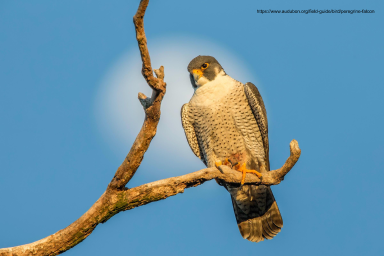
The peregrine falcon can grow to length of 39-50 cm and have a wingspan of 95-115 cm weighing on average 600-1300 g with females often being considerably larger than the males, they have dark blue colouring on the upper feathers and on the feathers below a pale colour with dark “bars” throughout. They are amazingly the fastest animal on the planet and have been recorded flying at speeds of 200 miles per hour which they can achieve during their arial stoops which is how they catch their prey which is normally a medium sized bird, however they only kill the bird 20% of the time so often several attempts are needed. They have a lifespan of roughly 10 years with the oldest on record reaching 15 years and 6 months, they pair together for several years, both caring for the juveniles that hatch which are browner in colour and heavily streaked below when they have their feathers. Both of the adults care for the young which are then able to fly after 5-6 months. In Wales they are often found around the estuaries during winter, their normal habitat is cliff side such as the cliffs at south stack and in recent years they have begun to nest on tall buildings that have covered ledges. Only recently have their numbers made a comeback as in the 1960s they were rapidly killed by pesticides yet have now reached 1,500 breeding pairs putting them safely in the green status margin in regards to conservation. They are protected by the “Wildlife and countryside act 1981”.