

ROI animal life

My favourite examples of animal life in the R.O.Ireland


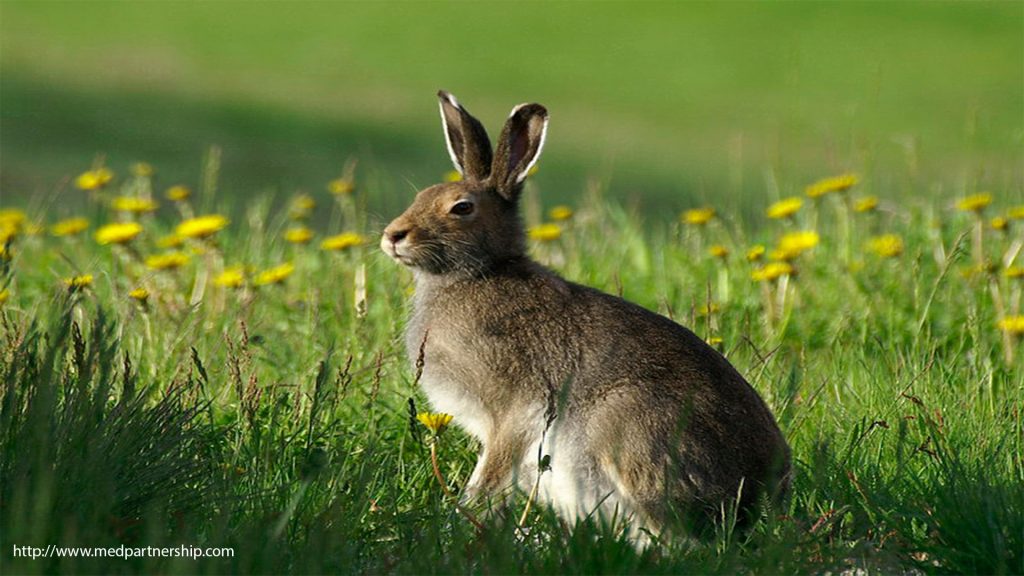
Irish hare


A subspecies of the mountain hare (despite being genetically unique in comparison) only found in Ireland they are able to grow to a weight of 3-3.6kg at adulthood with females being slightly larger, they have a “russet” brown coat most of the time-though it can be quite varied- they also have a white tail and under belly yet they do not commonly fully moult (change colour) in winter only on certain parts such as the tip of the ears which are commonly smaller than the head unlike in brown hares, they can live on average for 9 years yet mortality is observed to be high for juveniles.


They mostly feed on a large variety of plant life with variations in seasons, such as bark and roots in winter, this variety includes a documented 26 species of plant they regularly eat.


They are widespread throughout Ireland with a present estimated population of 59,700-86,900 though this has been known to go through massive increases and decreases temporarily. They are currently protected user the game preservation act 1930 in the R.O.I at the start then they were protected by the wildlife act 1976 and the wildlife amendment act 2000, they are also listed on Appendix III and as an internationally important species in the Irish red data book.


The Western European hedgehog

The only hedgehog spices in Ireland it is suspected that they were introduced in the 13th century as a food source, they are able to grow to a length of 30 cm with a tail that grows up to 5 cm and grow up to a weight of 300 g they are well known due to being the only hedgehog species in Ireland.They have characteristic spines that cover their back which grow up to 2-3 cm, of which they have roughly 7,000, they are not sharp, poisonous or barbed they are actually used as defense due to the thickness of the spines, or more accurately hollow hairs, which is used when they are threatened and roll up into a ball to prevent the predator from grabbing a hold of them in any way.

The normal weight of a hedgehog can increase to up to 2 kg in winter, this is due to the hedgehog having a built up fat reserves for hibernation in winter, specifically November to March or April, this can change depending on the age and weight of the hedgehog. They are a nocturnal species able to travel up to 2 km each night in search of food which is mostly insects such as beetles, caterpillars and earthworms, though they are also opportunistic hunters, so they will hunt weak prey and omnivores so they will also eat some plants such as berries.In Ireland they are one of the most common forms of roadkill so try to be cautious if you can when in an area known for hedgehogs but do not risk your own safety to this degree, humans are also passively the biggest threats due to hedgehogs falling in ponds or drains or being poisoned by pesticides. They are on Appendix III of the Bern convention, it is believed by the British hedgehog society that the biggest threat to them is habitat loss so new nature reserves key to the survival of the species.